Every city wants a symbol the world can recognize.
Paris has the Eiffel Tower. Sydney has the Opera House. New York has the Statue of Liberty.
These landmarks have become more than architectural achievements. They are visual shortcuts to entire cities. A single silhouette can activate associations built over decades: culture, ambition, lifestyle, history, or opportunity.
Dubai presents an interesting case.
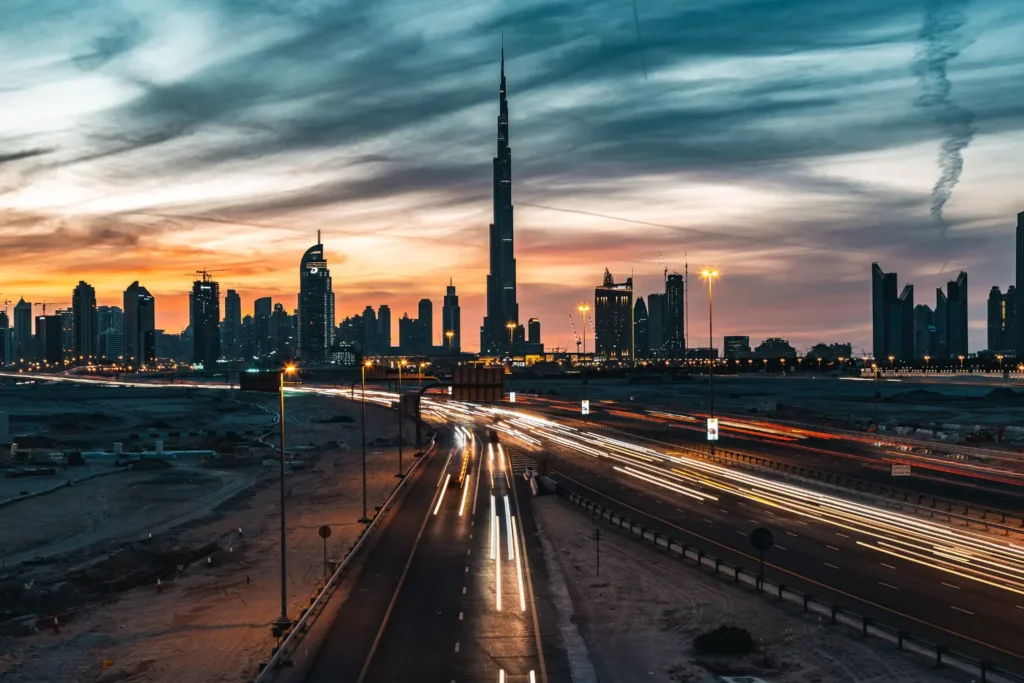
In less than half a century, the city has developed a remarkable collection of recognizable landmarks: Burj Al Arab, Emirates Towers, Burj Khalifa, Dubai Frame, Museum of the Future, and others.
Each has its own identity. Yet collectively, they contribute to a broader perception of Dubai as a place defined by ambition, transformation, and the pursuit of what comes next.
This raises a question that goes far beyond architecture:
What can businesses learn from a city that has made recognition one of its most visible competitive advantages?
The answer lies in three fundamental principles of branding: distinctiveness, meaningful associations, and consistency over time.
1. Recognition Is a Strategic Brand Asset
Imagine seeing a photograph of the Burj Al Arab without a caption.
You probably wouldn’t need someone to tell you where it is.
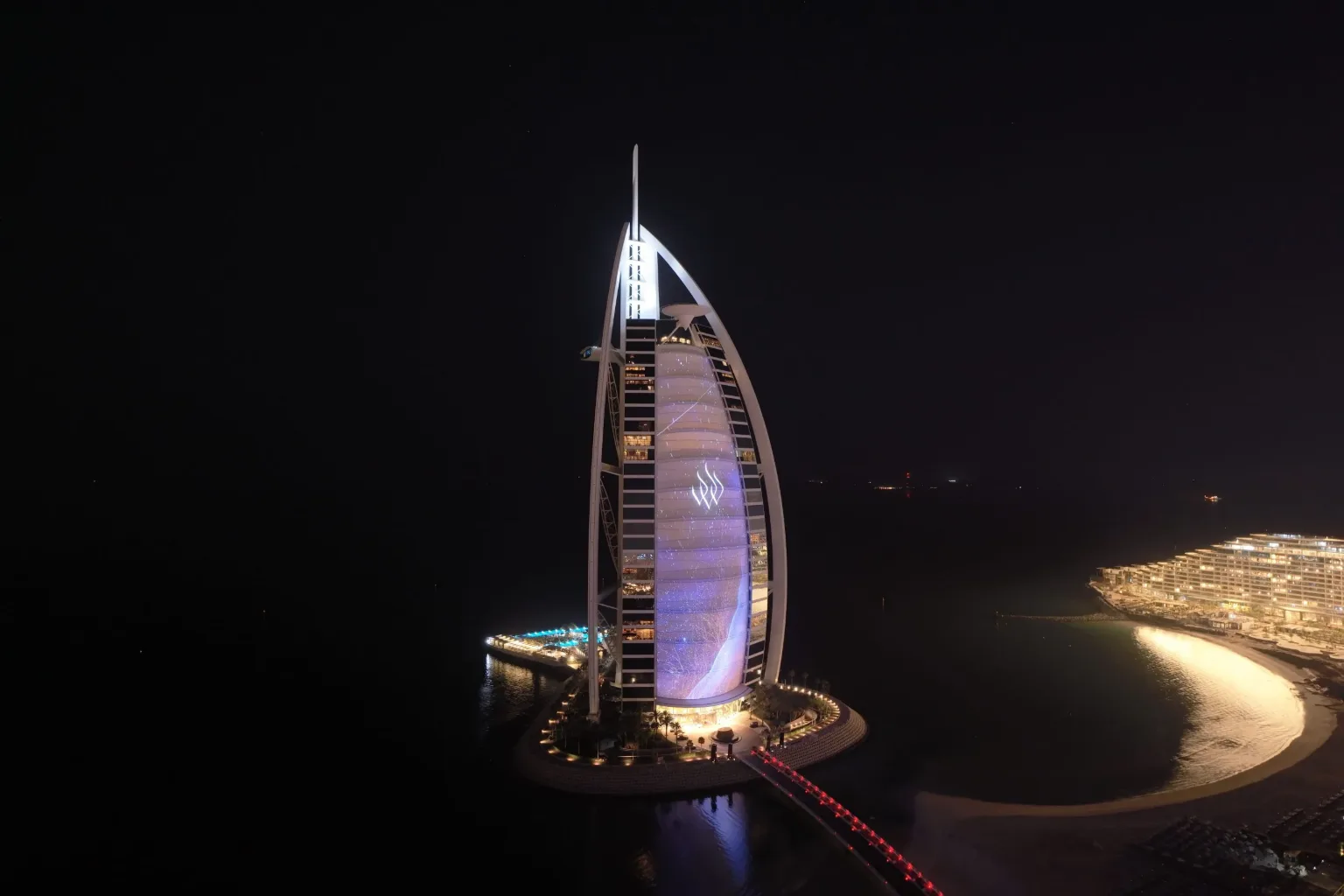
The same applies to Burj Khalifa or the Museum of the Future. Their forms are recognizable enough to communicate a location before a single word appears.
In marketing, this is closely related to the concept of Distinctive Brand Assets.
Research from the Ehrenberg-Bass Institute for Marketing Science, particularly the work of Professor Jenni Romaniuk, identifies distinctive assets as non-name elements that help people recognize and identify a brand. These can include logos, colors, shapes, characters, sounds, or other recognizable cues.
Two characteristics determine their strength: fame and uniqueness.
An asset needs to be widely associated with the brand, and that association should be relatively exclusive.
Consider Nike’s Swoosh, McDonald’s Golden Arches, or Coca-Cola’s distinctive bottle shape. These elements can communicate brand identity even without the company name.
Dubai’s landmarks operate in a comparable way, although a city is a more complex entity than a commercial brand.
The sail-shaped Burj Al Arab, the extraordinary vertical profile of Burj Khalifa, and the elliptical Museum of the Future provide recognizable visual cues that help people identify Dubai across photographs, advertisements, travel content, news coverage, and social media.
This creates a significant advantage: the city can be recognized even when it is not explicitly being promoted.
For businesses, the lesson is straightforward.
A strong brand should not depend entirely on its name to be recognized.
Yet many companies invest heavily in advertising while changing their visual language, messaging, and identity every few years.
They continually introduce new creative elements without giving existing ones enough time to become familiar.
The strategic question is not simply whether a brand looks different.
It is whether audiences can consistently identify it, remember it, and distinguish it from competitors.
Distinctiveness is not decoration. It is an investment in memory.
2. Meaning Makes Recognition Valuable
Being recognizable is important. But recognition alone does not explain why a brand matters.
A distinctive shape may attract attention. What gives it long-term value is the meaning people associate with it.
Dubai’s architectural landmarks demonstrate how visual identity can connect with broader brand narratives.
Burj Al Arab draws inspiration from the sail of an Arabian dhow, referencing the region’s maritime heritage while expressing a contemporary vision of luxury.
Burj Khalifa communicates a different set of associations: exceptional scale, engineering ambition, and the desire to challenge established limits.
The Museum of the Future brings another dimension. Its Arabic calligraphy connects cultural identity with a building explicitly associated with innovation and the future.
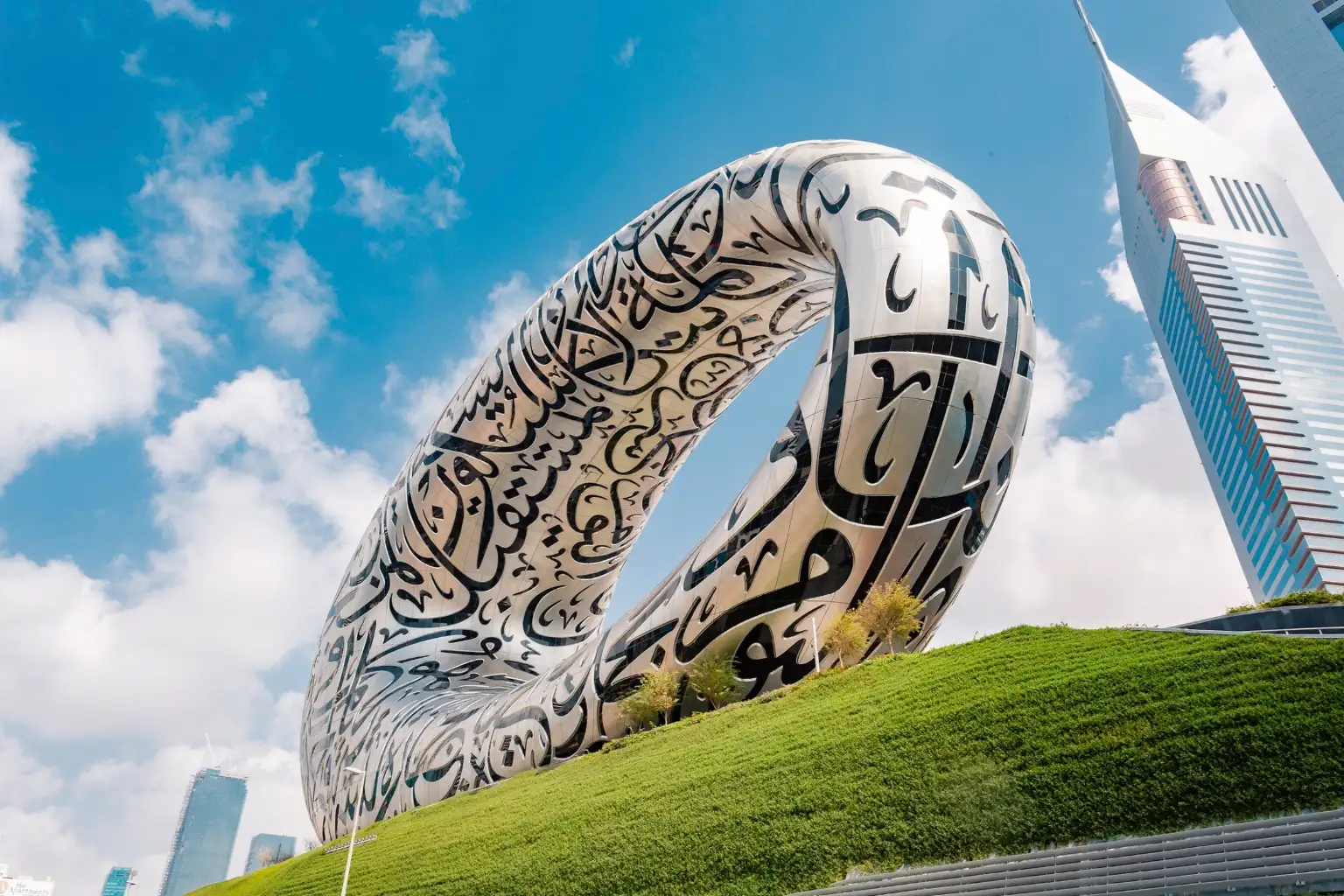
These examples are not identical in purpose or meaning. Their significance lies in how different physical expressions can reinforce complementary perceptions of a place.
In brand strategy, this connects to brand associations: the ideas, attributes, experiences, and emotions people connect to a brand in memory.
A brand may want to be perceived as innovative, trustworthy, premium, accessible, or culturally relevant.
But declaring these qualities is rarely enough.
The brand needs credible expressions that make those associations easier to understand and remember.
A financial company cannot establish trust simply by using the word trust in its advertising. Its service experience, communication, transparency, and behavior must support that claim.
Similarly, a business cannot become innovative by repeatedly calling itself innovative. Innovation needs visible evidence.
Dubai’s landmarks offer a useful illustration of this principle: abstract ambitions can become more tangible when people encounter concrete expressions of them.
For brand leaders, the important question is:
What does our brand make people believe, beyond what we explicitly tell them?
The strongest brand identities are not merely recognizable. They connect recognizable cues with meaningful, credible associations.
3. Consistency Does Not Mean Repetition Without Change
One of the most interesting aspects of Dubai’s visual identity is that its landmarks do not look alike.
Burj Al Arab resembles a sail. Burj Khalifa is defined by verticality. Cayan Tower twists. Dubai Frame creates a literal frame around the city. The Museum of the Future takes the form of a calligraphy-covered ring.
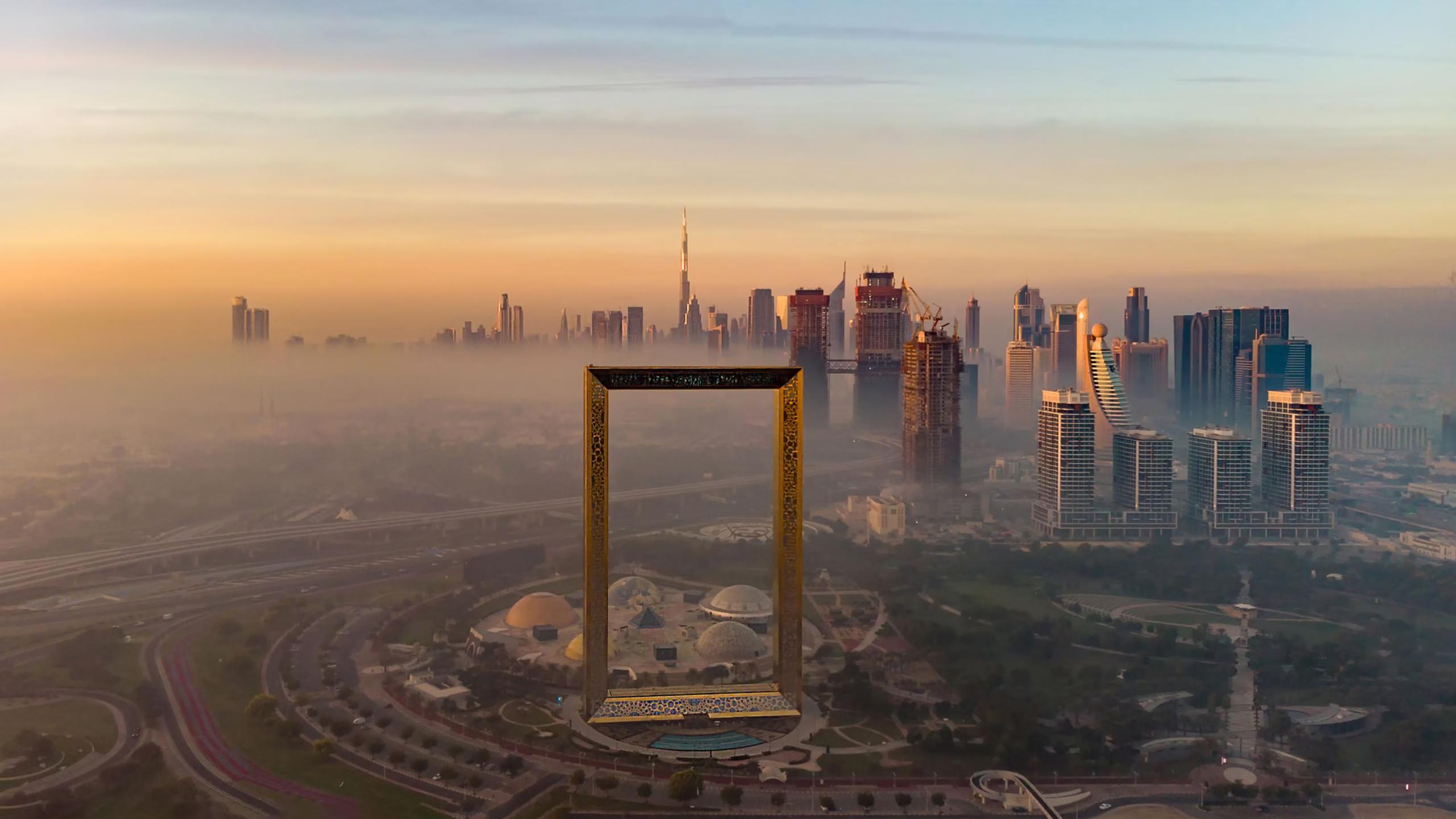
There is no shared architectural template.
Yet these buildings can contribute to a coherent perception of Dubai.
Why?
Because brand consistency is not necessarily about repeating the same visual form. It is about reinforcing compatible associations over time.
Dubai’s prominent landmarks, despite their differences, frequently communicate ideas such as ambition, experimentation, visibility, and progress.
This is an important distinction for marketers.
Many businesses confuse consistency with creative uniformity.
They assume a consistent brand must always look identical, use the same layouts, or repeat the same messages.
But effective consistency operates on two levels.
First, a brand needs stable, recognizable identifiers. This is where protecting distinctive assets matters.
Second, its evolving products, experiences, communications, and innovations should support a coherent positioning.
The execution can change without abandoning the identity.
Research on place branding by Mihalis Kavaratzis and Mary Jo Hatch emphasizes that place identities are dynamic rather than fixed. They evolve through interactions between a place and its stakeholders.
This helps explain why successful branding is not simply a matter of imposing an identity through communication.
It requires an ongoing relationship between what a brand promises, what it does, and how people experience it.
For businesses, consistency should therefore be understood as continuity of meaning, supported by recognizable assets, rather than resistance to change.
A brand can evolve considerably while becoming more identifiable, provided its evolution strengthens rather than fragments its positioning.
4. The Most Powerful Brand Communications Are Not Always Advertisements
Traditional marketing often treats brand communication as something that happens through campaigns.
A company creates an advertisement, publishes content, sponsors an event, or launches a promotional initiative.
But audiences form brand perceptions through much more than advertising.
Products, environments, customer experiences, employees, partnerships, and public behavior all contribute to what people believe about a brand.
For cities, this is particularly evident.
An iconic building is not simply a message displayed to an audience. It is a physical experience, a destination, a photograph, a reference point, and often a subject of conversation.
Once a landmark becomes recognizable, its image can circulate through countless channels without requiring a new advertising campaign each time.
A traveler’s photograph, a film scene, a business presentation, or an international news report can all reinforce an association with Dubai.

This does not mean such exposure is equivalent to paid media, or that its value can automatically be quantified.
It means that recognizable assets can extend a brand’s presence beyond its directly controlled communications.
The same principle applies to businesses.
A distinctive product design, recognizable retail environment, memorable service ritual, or consistent customer experience can become part of a brand’s communication system.
These assets create opportunities for recognition whenever people encounter them.
Instead of asking only, “What should our next campaign say?” marketers should also ask:
“What have we created that communicates our brand even when we are not advertising?”
That question shifts branding from a communications exercise toward the design of the entire brand experience.
5. Visibility Is Not the Same as Brand Equity
There is, however, an important limitation to the Dubai example.
A landmark does not automatically become an icon simply because it is expensive, unusual, or ambitious.
And an impressive skyline does not, by itself, establish a successful city brand.
People ultimately shape brand meaning through their experiences, interpretations, conversations, and expectations.
Academic research on place branding reinforces this distinction. Cities cannot fully control their brands through planned messages because residents, visitors, businesses, and other stakeholders continuously participate in creating their reputations.
Dubai’s global identity also depends on factors beyond architecture, including its economic environment, connectivity, tourism offering, infrastructure, services, and international relationships.
Its buildings are highly visible expressions of the city, not a complete explanation of its reputation.
This distinction matters equally for commercial brands.
A visually impressive identity may generate attention without producing preference. A memorable campaign may increase awareness without improving trust. An innovative product may attract curiosity without creating lasting customer relationships.
Recognition helps a brand enter people’s minds.
But reputation, relevance, and experience influence what happens afterward.
The goal is not simply to be noticed.
It is to become recognizable for reasons that matter to the people a brand wants to reach.
The Real Lesson: Build a Brand People Can Recognize, Understand, and Remember
Dubai Design Week returns from 3–8 November 2026, bringing designers and creative thinkers together at Dubai Design District.
It offers a timely reason to consider a bigger question: how does design contribute to identity?
Dubai’s skyline provides one answer, but the implications reach well beyond buildings.
Its recognizable landmarks illustrate the potential of distinctive assets. Their cultural and aspirational associations demonstrate how design can communicate meaning. And their cumulative presence shows how different expressions can contribute to a recognizable identity over time.
None of this suggests that businesses should imitate Dubai’s scale or approach.
The more useful lesson is strategic.
Build distinctive assets that people can identify.
Connect them to associations worth remembering.
Reinforce those associations through consistent actions and experiences.
A brand does not need a skyscraper to become iconic.
It needs clarity about what it stands for, discipline in how it expresses that identity, and enough consistency for people to remember it.
Because ultimately, an icon is not something a business can simply declare into existence.
It is something people come to recognize.
And recognition, when supported by meaning and experience, can become one of a brand’s most valuable long-term assets.
Free strategy call
Is your brand as recognizable as it should be?
Book a free strategy call with Insight and we will help you define the distinctive assets your audience should remember you by.
References and Further Reading
-
- Romaniuk, J. — Brands of Distinction, Ehrenberg-Bass Institute for Marketing Science. Research on distinctive brand assets, fame, and uniqueness.
-
- Ehrenberg-Bass Institute — Commercial Research: Distinctive Assets Measurement. Frameworks for measuring brand assets and mental availability.
-
- Kavaratzis, M. (2004) — From City Marketing to City Branding: Towards a Theoretical Framework for Developing City Brands, Place Branding.
-
- Kavaratzis, M. & Hatch, M. J. (2013) — The Dynamics of Place Brands: An Identity-Based Approach to Place Branding Theory, Marketing Theory.
-
- Kavaratzis, M. & Kalandides, A. (2015) — Rethinking the Place Brand, Environment and Planning A.
-
- Visit Dubai — Official destination information on Dubai’s landmarks and their design concepts.
-
- Dubai Design Week — Official information on the 2026 edition.